Proper Time
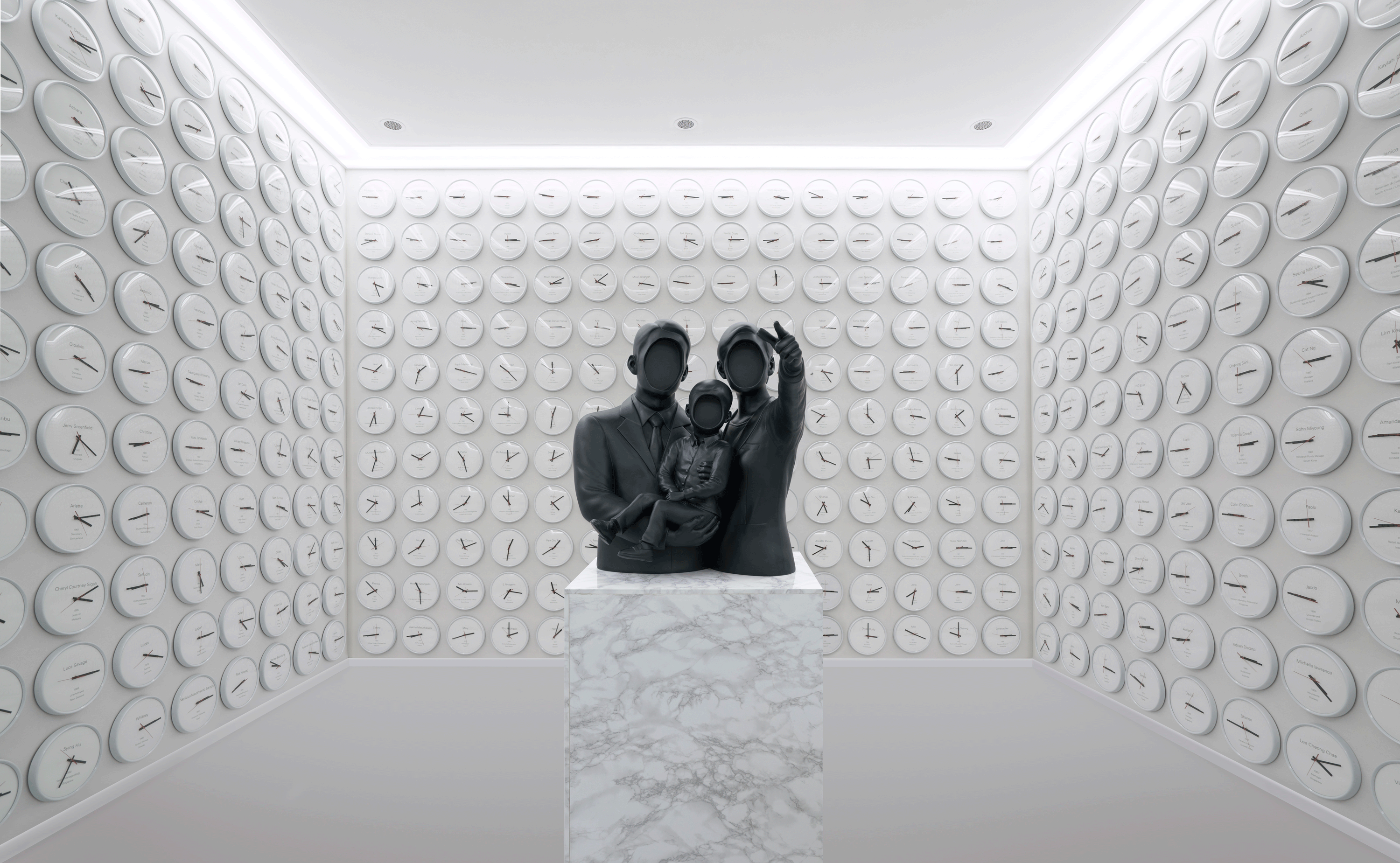
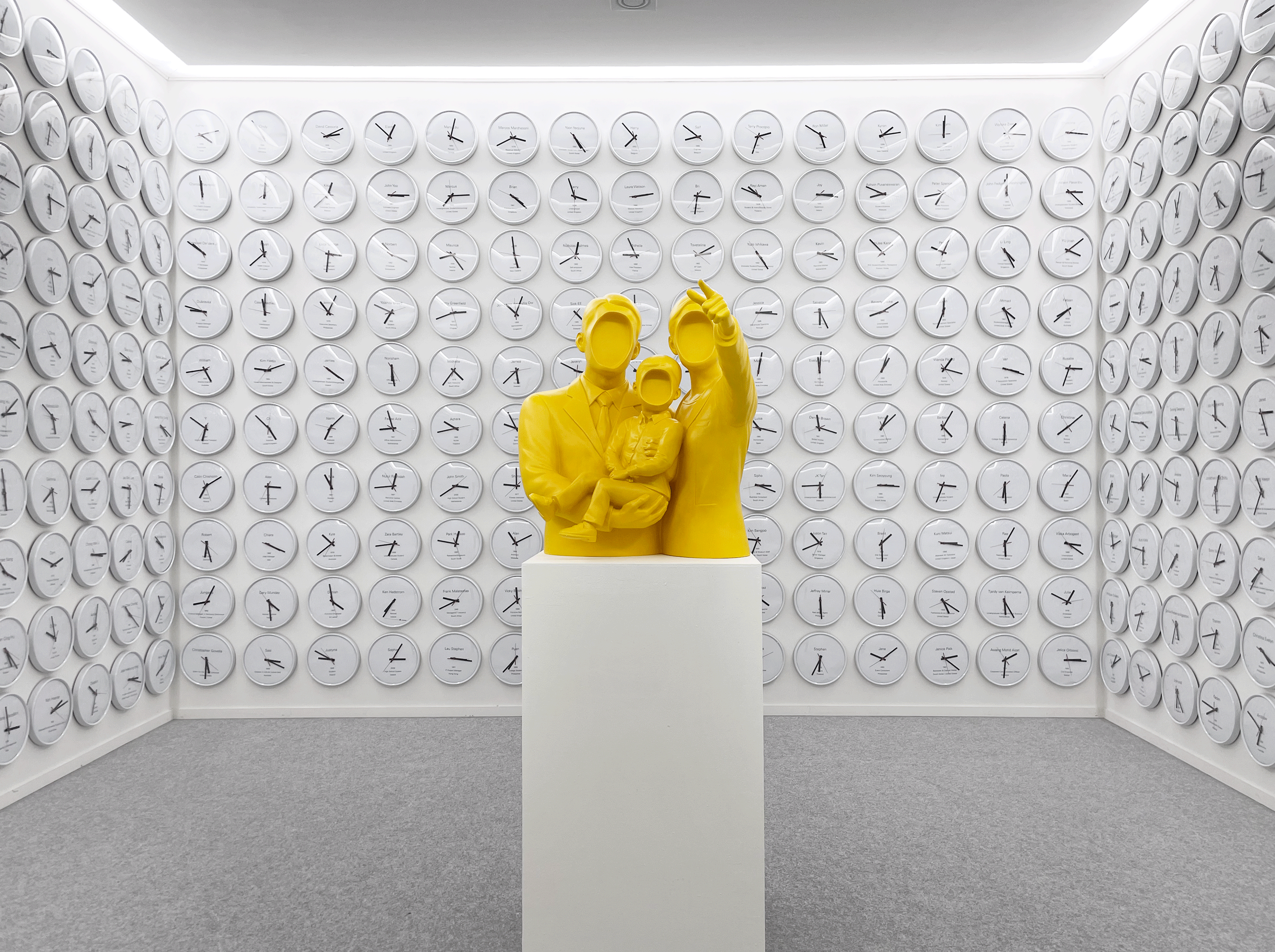
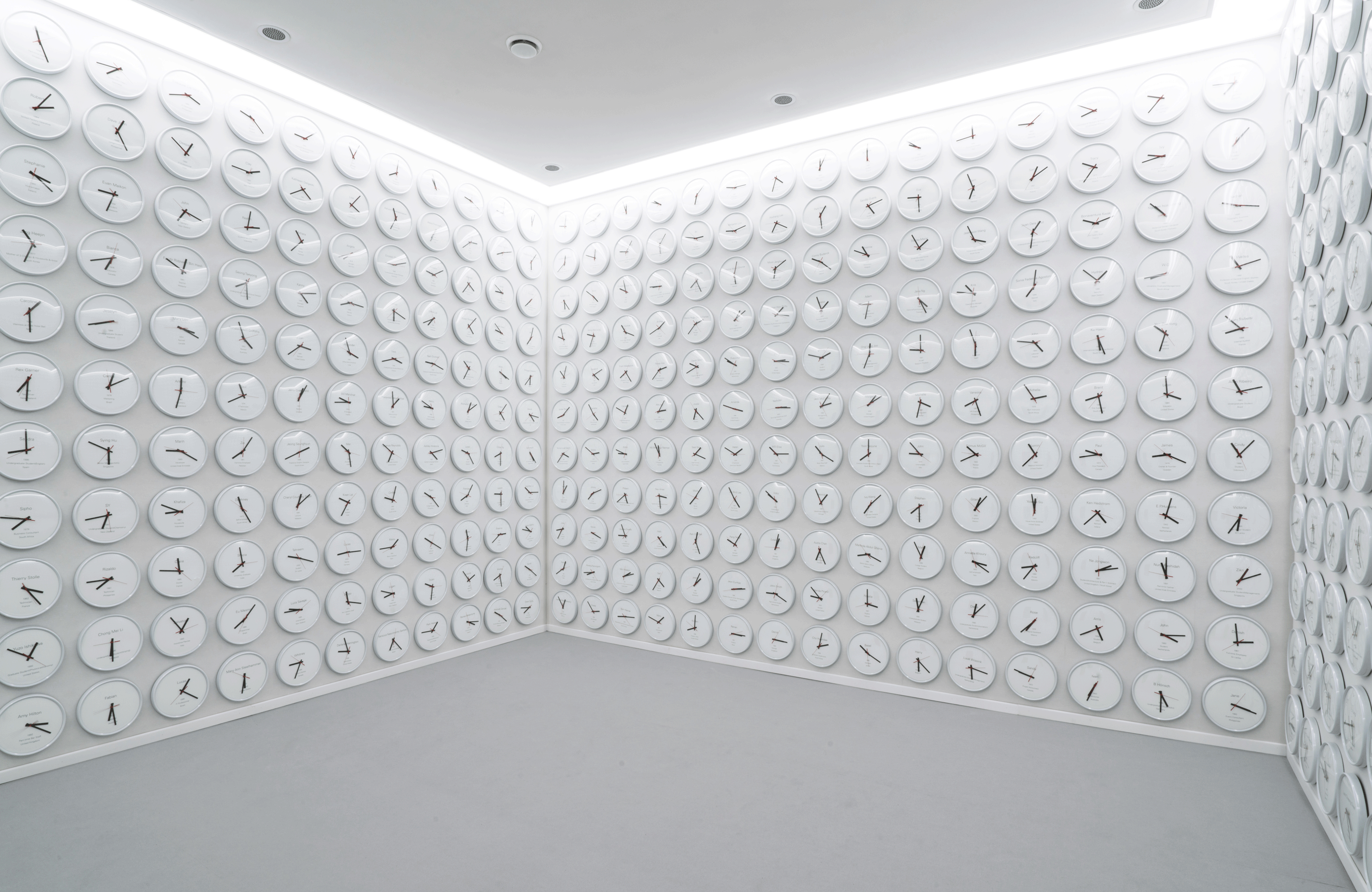
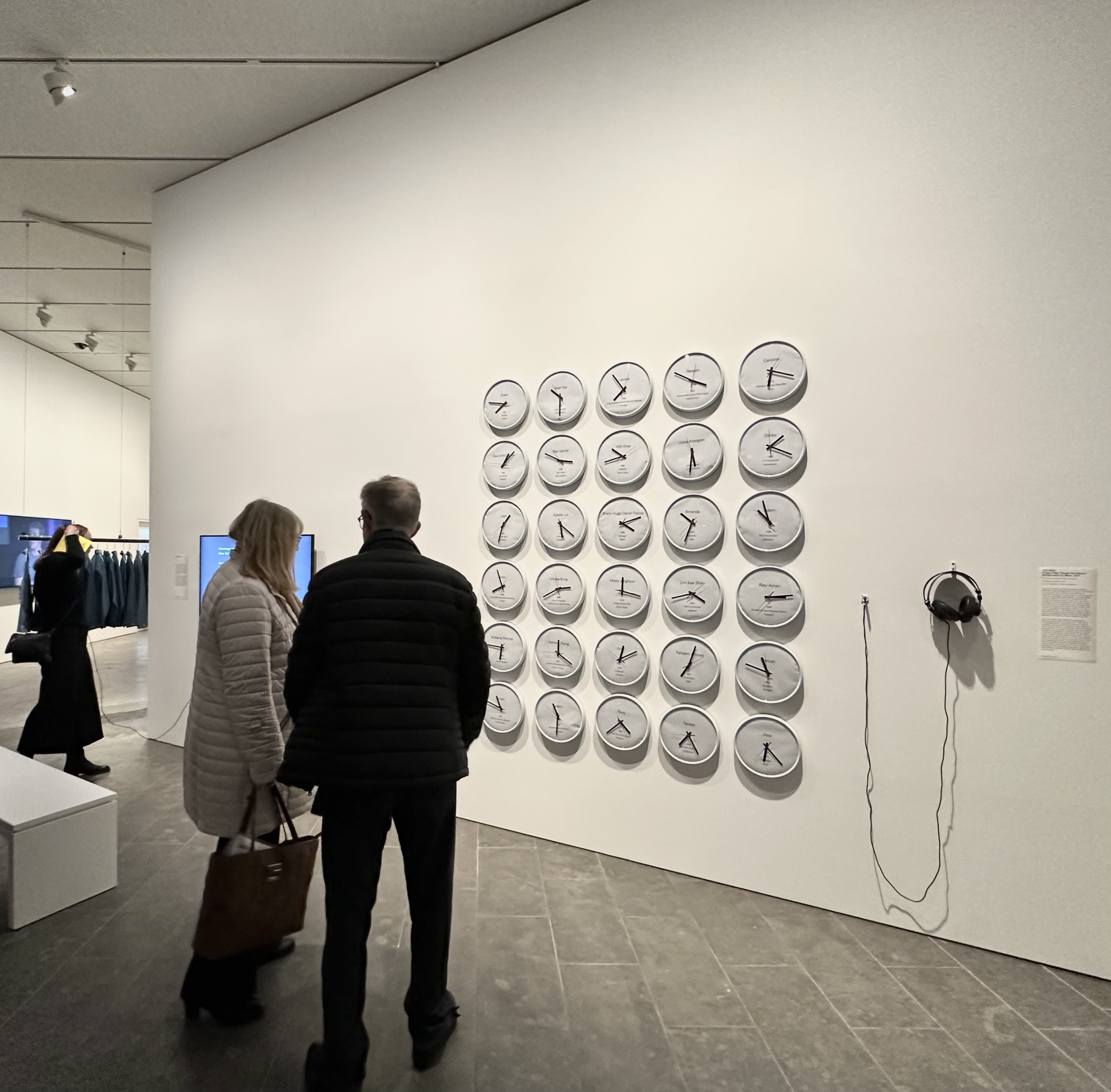
Proper Time, 2017, 668 Clocks, dimension variable.
Exhibitions:
Counter Balance, Venice Biennale Korean Pavilion, 2017 ︎
Counter Balance, ARKO, 2018
Channel: Wave–Particle Duality, Changwon Sculpture Biennale, 2022 ︎
We, Such Fragile Beings, PODO Museum, 2025 ︎ The Irreplaceable Human, Louisiana Museum, Denmark, 2023 ︎
Commissioned Works:
SBS D Forum 2020 | SBS
‘고유시’는 전 세계 1200명을 인터뷰해 얻은 데이터를 바탕으로, 전 지구적 경제 구조와 역사·문화·전통이라는 외부적 조건, 그리고 노동 환경에 따라 각 개인의 삶의 속도가 상대적으로 다르게 흐른다는 메시지를 담은 미디어 설치 작업이다.
글로벌리즘은 전 세계의 모든 로컬을 연결하며 거대한 정보와 물류의 네트워크를 형성했고, 인류는 하나의 가치와 교환 방식을 공유하는 시대를 맞이했다. 이러한 가치는 마치 시간이 모두에게 동일하게 적용되는 것처럼 획일적인 기준으로 교환의 영역을 구축해 왔다. 그러나 각 국가와 문화 사이의 격차는 점차 계층으로 구분되었고, 다양성은 상위 계층의 문화 지향성을 띠게 되었다. 그 결과, 역설적으로 로컬의 문화와 전통은 빠르게 붕괴되며 개인의 의식과 삶의 방식에 깊은 영향을 미치고 있다.
작가는 이러한 상황을 아시아 10개국을 방문하며 생산과 노동, 문화와 전통의 변화를 기록한 〈Made in〉 시리즈를 통해 지속적으로 다뤄왔다. 그리고 이 작업에서는 시간을 측정하는 절대적 기준인 ‘시계’를 매개로, 동시대를 살아가는 개인들이 어떤 상대적 차이를 지니는지를 가시화한다.
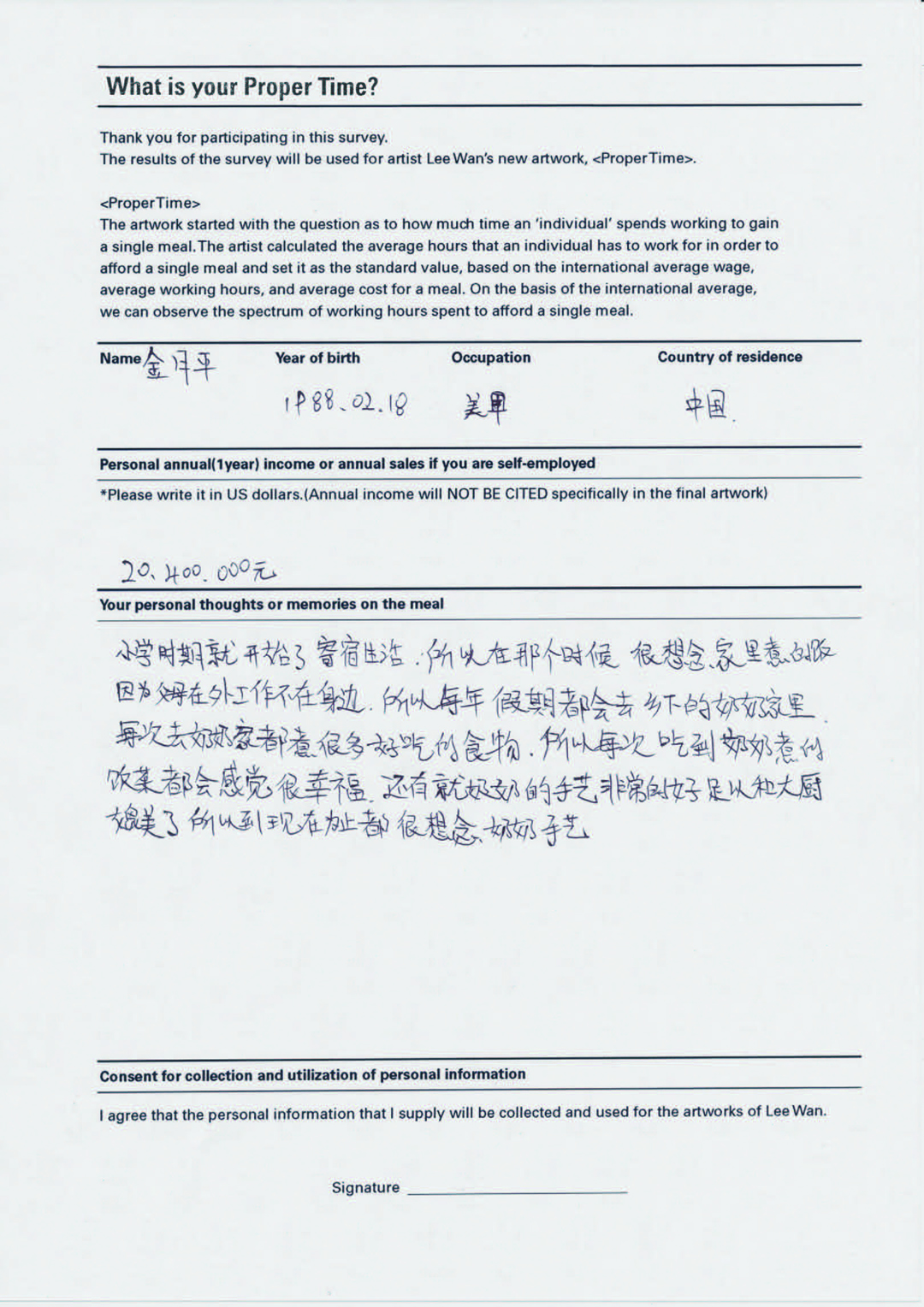
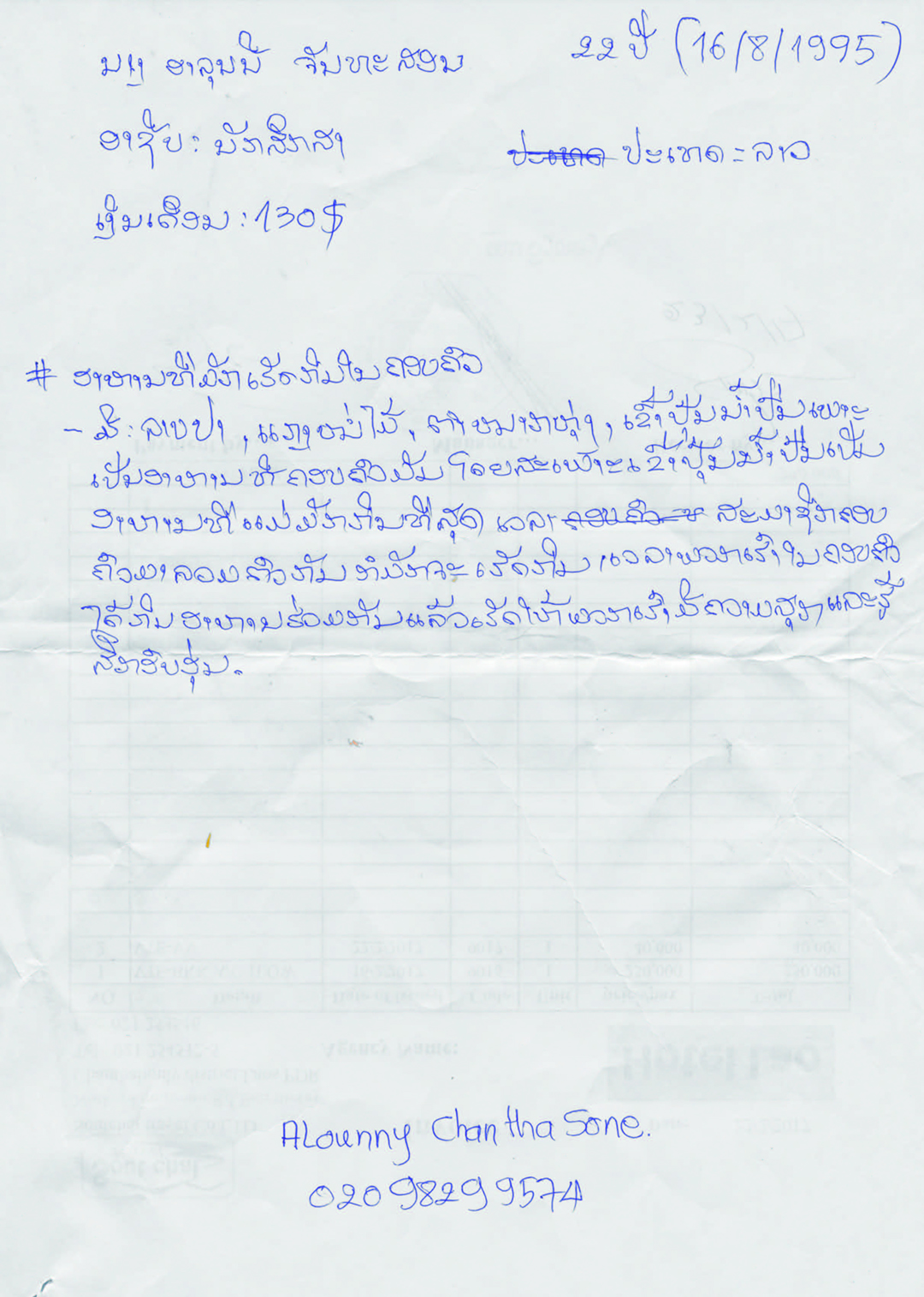
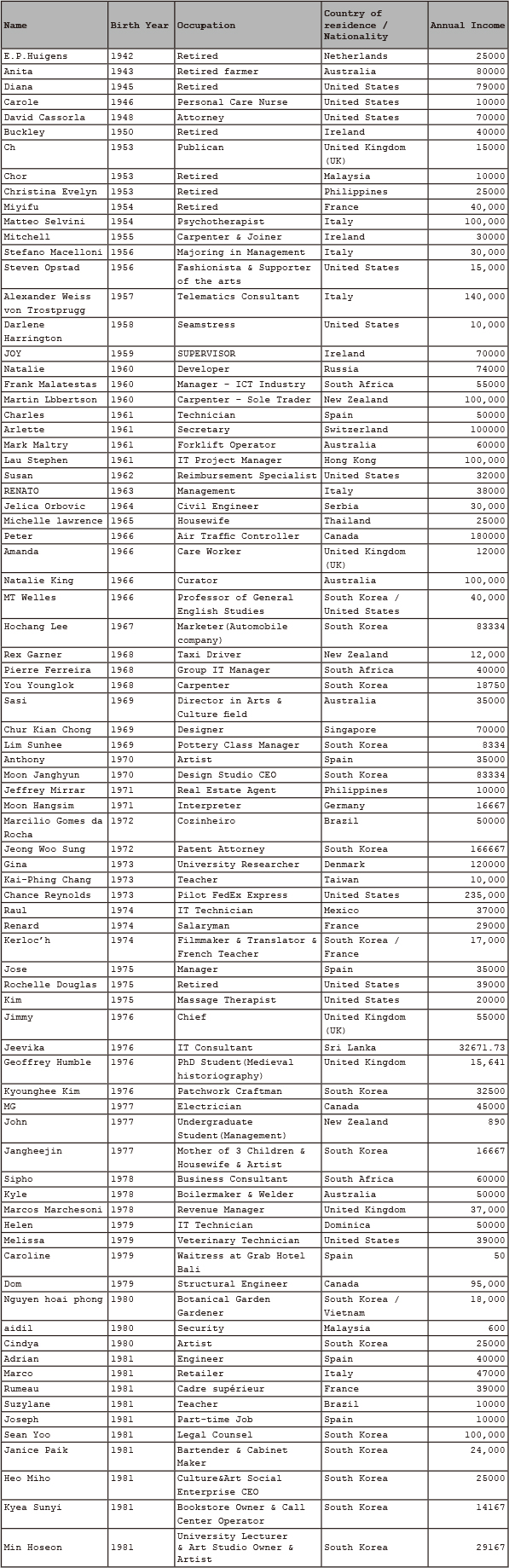
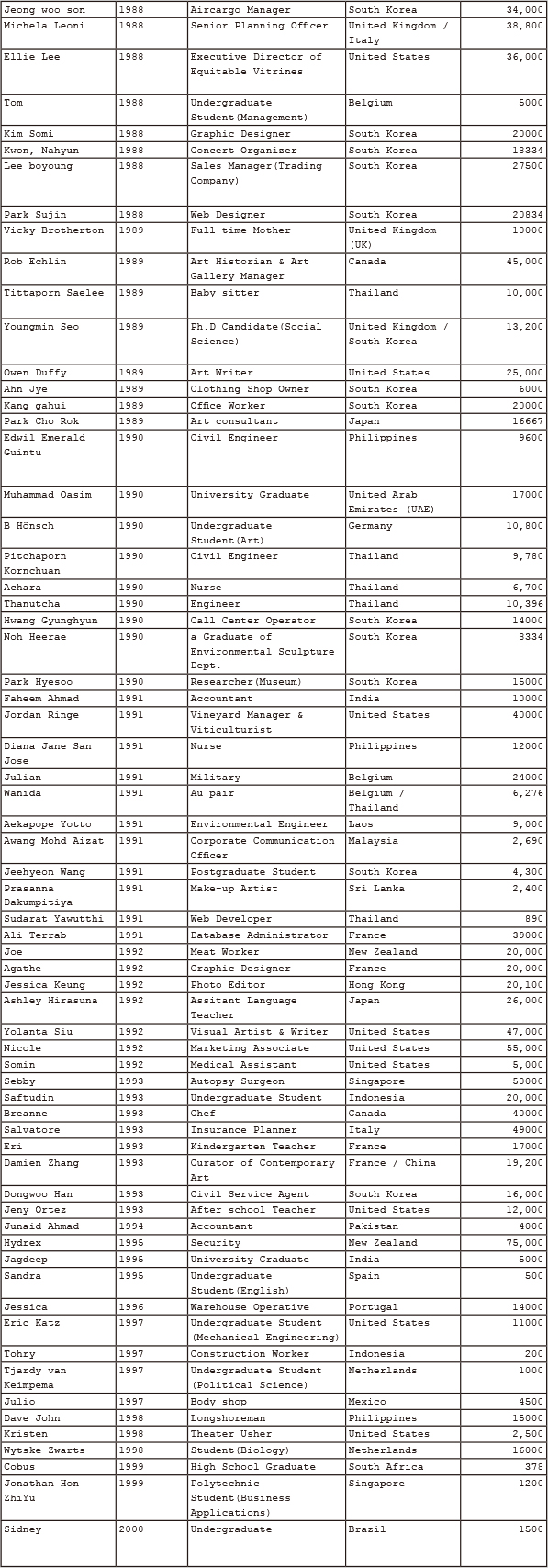
2013년부터 아시아 10개국에서 직접 생산과 노동 활동을 통해 만든 생산물로 한 끼의 아침 식사를 완성하는 〈Made in〉 시리즈와 병행해 진행된 이 작업에서, 작가는 전 세계의 사람들을 직접 만나 개인의 경제력, 국가 GDP, 한 끼 식사에 지출하는 비용, 식사와 관련된 기억 등을 설문 조사해 총 1200명의 데이터를 확보했다.
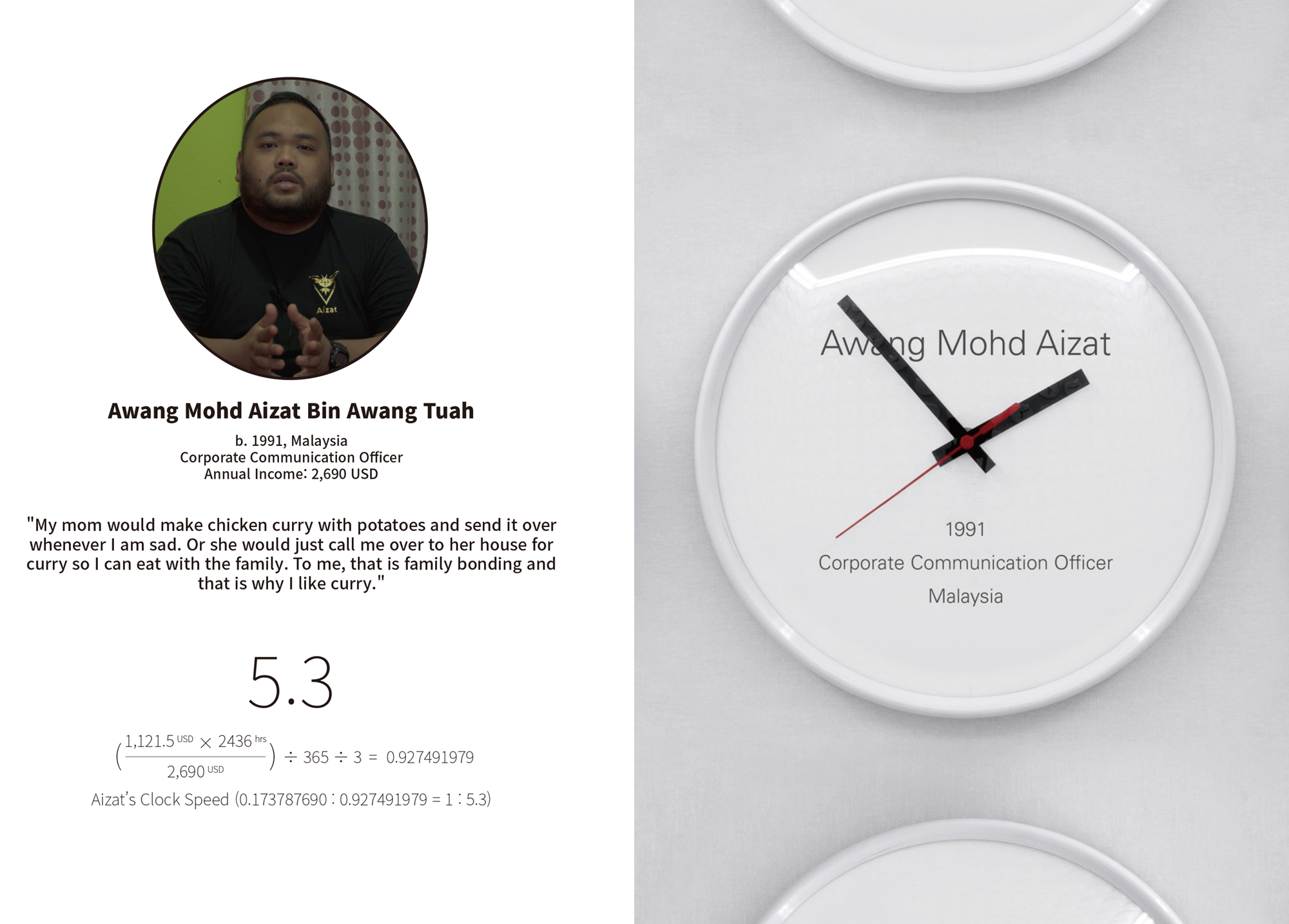
이렇게 수집한 데이터의 각 수치는 아인슈타인의 상대성 이론에서 차용한 공식에 대입되어 개인 고유의 상대값으로 산출되었고, 그 값은 시계에 장착된 기계식 속도 조절 장치에 입력되어 각각의 시계가 서로 다른 속도로 작동하도록 설정되었다.
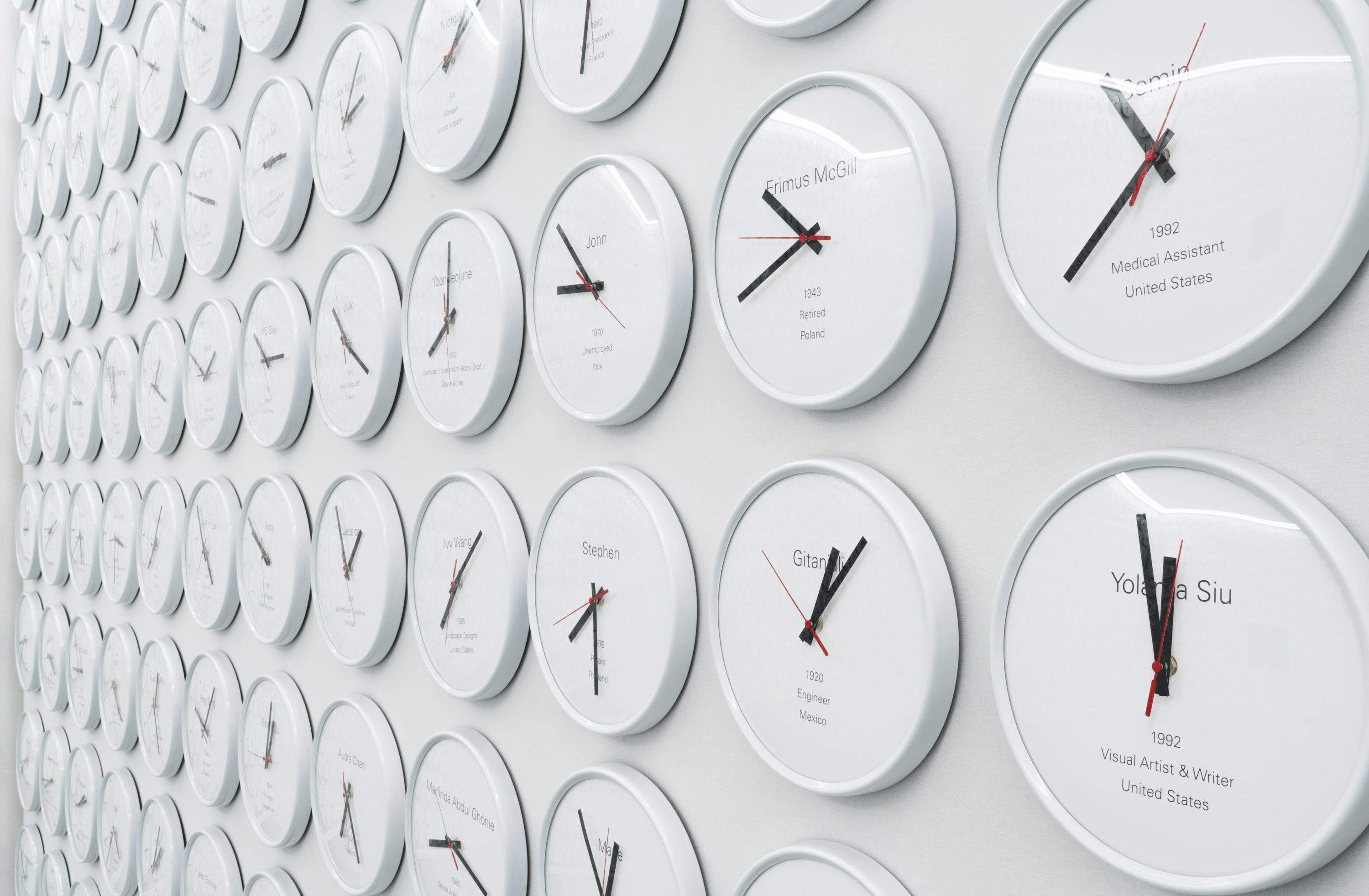
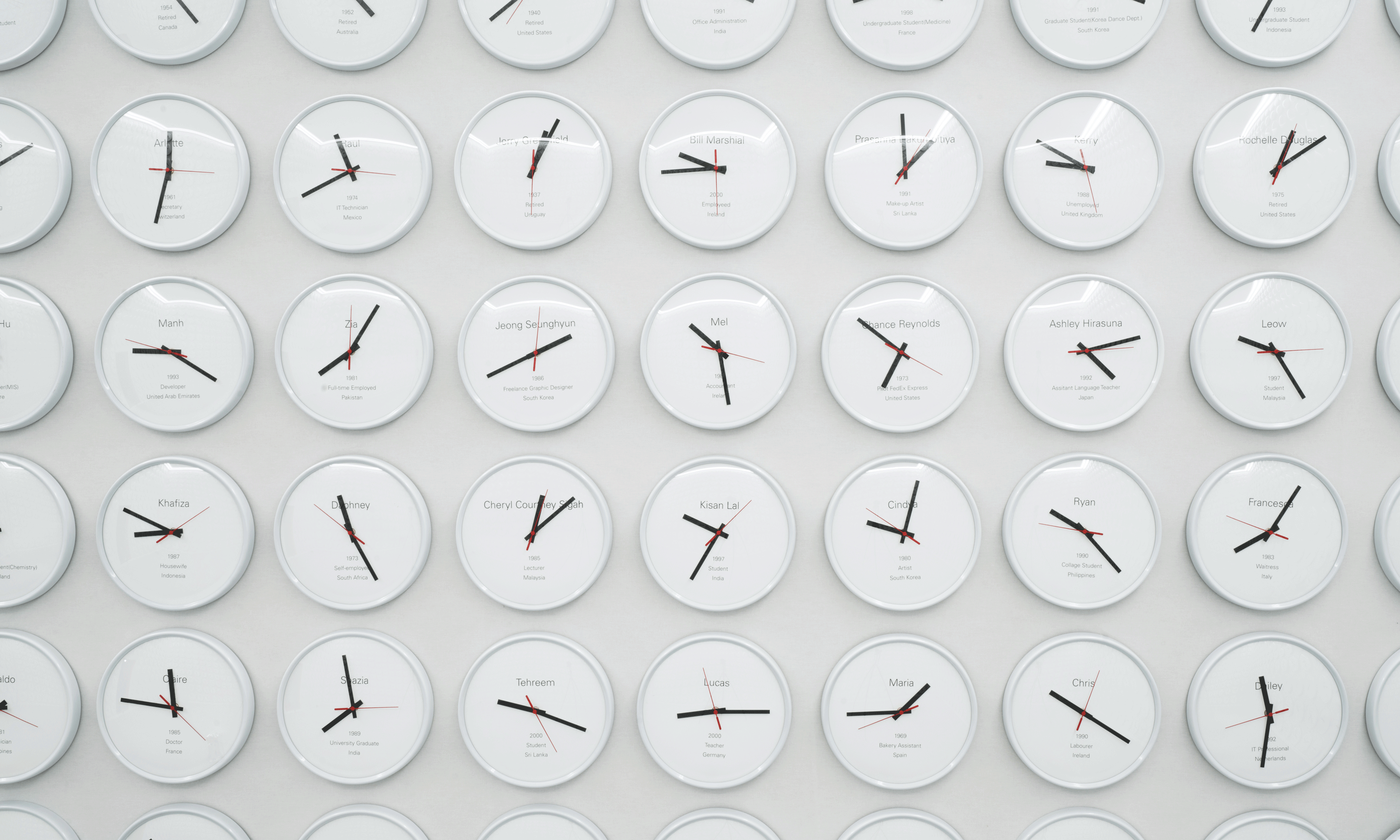
각 시계에는 인터뷰에 응한 사람의 이름, 생년, 직업, 국적이 기록되어 있으며, 산출된 고유값에 따라 변화하는 시계의 속도는 개인의 소득 수준, 경제 상황, 국가 GDP와 물가, 그리고 한 끼 식사에 지출하는 비용 등에 의해 결정된다. 예를 들어 미국의 뱅커는 실제 시간 기준보다 10배 느리게 시간이 흐르는 반면, 인도네시아의 공장 노동자는 실제 시계 속도보다 60배 빠르게 시간이 흐른다.
식사를 기준으로 삼은 이유는 ‘먹는 행위’가 인간 생존의 지속성을 위한 불가항력적인 조건으로서 모두에게 동일하게 적용되는 절대적 행위이기 때문이다. 동시에 오늘날 사람들이 경험하는 동시대의 ‘식사’는 세계화를 통해 유통되는 거대한 시스템과 네트워크를 상징하는 역사적·문화적 컨텍스트이기도 하다.
이처럼 서로 다른 속도로 작동하는 시계들은 하나의 공간에 설치되어 연출되며, 인터뷰 질문 중 ‘식사에 대한 기억’에 대한 응답은 녹음된 음성 데이터로 제작되어 천장에 설치된 스피커를 통해 공간 전체에 흘러나온다. (삶의 속도가 빠르든 느리든, 대부분의 사람들은 사랑하는 사람과 가족에 대한 기억을 이야기했다.)
이 작품은 2017년 베니스 비엔날레 한국관의 메인 작품으로 선보였으며, 이후 2018년 아르코미술관의 베니스 비엔날레 귀국 보고전, 2022년 창원조각비엔날레, 2023년 덴마크 루이지애나 미술관, 2025년 포도뮤지엄에서 전시되었다.
(전 세계 1200명의 설문 조사 데이터를 기반으로 제작된 1200개의 시계작업 중 전시 공간의 제약으로 인해 베니스비엔날레 한국관에서는 668점만 전시되었다.)
Proper Time is a media installation based on data collected through interviews with 1,200 people worldwide. The work conveys the idea that the pace of individual lives flows at different relative speeds according to global economic structures, external conditions such as history, culture, and tradition, and the environments of production and labor.
Globalism has connected localities across the world, forming vast networks of information and logistics, and ushering in an era in which humanity shares common systems of value and exchange. These values have been constructed as if time itself were applied uniformly to everyone, establishing standardized frameworks of exchange. Yet the gaps between nations and cultures have increasingly solidified into hierarchical distinctions, and diversity has come to take on the cultural orientation of the upper classes. As a result, local cultures and traditions have paradoxically collapsed at an accelerating pace, exerting a profound influence on individual consciousness and ways of life.
Lee Wan has continually addressed these conditions through the Made in series, developed through visits to ten Asian countries to document changes in production, labor, culture, and tradition. In Proper Time, he turns to the clock—an absolute instrument for measuring time—as a medium through which to visualize the relative differences among individuals living in the same contemporary moment.
Developed in parallel with the Made in series, in which Lee Wan completes a single breakfast using products made through hands-on production and labor in ten Asian countries since 2013, this project involved direct encounters with people around the world. Through surveys, the artist gathered data from 1,200 participants, including personal economic conditions, national GDP, expenditure on a single meal, and memories associated with eating.
Each numerical value from the collected data was inserted into a formula adapted from Einstein’s theory of relativity to calculate an individual-specific relative value. These values were then input into mechanical speed-regulating devices installed in clocks, causing each clock to operate at a different rate.
Each clock bears the name, year of birth, occupation, and nationality of the interviewee. The variable speed of each clock—determined by the calculated individual value—reflects factors such as personal income level, economic circumstances, national GDP and cost of living, and the expense of a single meal. For example, time flows at one-tenth the speed of real time for a banker in the United States, while it moves sixty times faster than real time for a factory worker in Indonesia.
The reason for using the meal as a reference point lies in the fact that eating is an unavoidable and universal act essential to human survival, equally applicable to everyone. At the same time, the contemporary experience of “the meal” embodies a historical and cultural context that symbolizes the vast systems and networks of globalization through which food circulates today.
The clocks, each operating at a different speed, are installed together within a single space. Responses to the interview question concerning “memories of meals” are produced as recorded audio data and broadcast throughout the exhibition via speakers installed in the ceiling. (Regardless of whether the pace of their lives was fast or slow, most participants spoke of memories involving loved ones and family.)
Proper Time was presented as the central work of the Korean Pavilion at the 2017 Venice Biennale, and was subsequently exhibited at the Venice Biennale return exhibition at ARKO Art Center in 2018, the Changwon Sculpture Biennale in 2022, the Louisiana Museum of Modern Art in Denmark in 2023, and Podo Museum in 2025.
(Of the 1,200 clocks produced based on the global survey data, only 668 were exhibited at the Korean Pavilion of the Venice Biennale due to spatial limitations.)